Genetically select the most accurate embryo
Preimplantation Genetic Testing (PGT) is a genetic testing method used to examine embryos created through in vitro fertilization (IVF) for specific genetic and chromosomal characteristics before they are transferred into the uterus. Preimplantation genetic testing helps identify certain genetic changes or chromosomal abnormalities in embryos, supporting embryo selection based on the test results. This approach can support IVF treatment planning in cases involving known risks of inherited genetic disorders or specific chromosomal abnormalities.
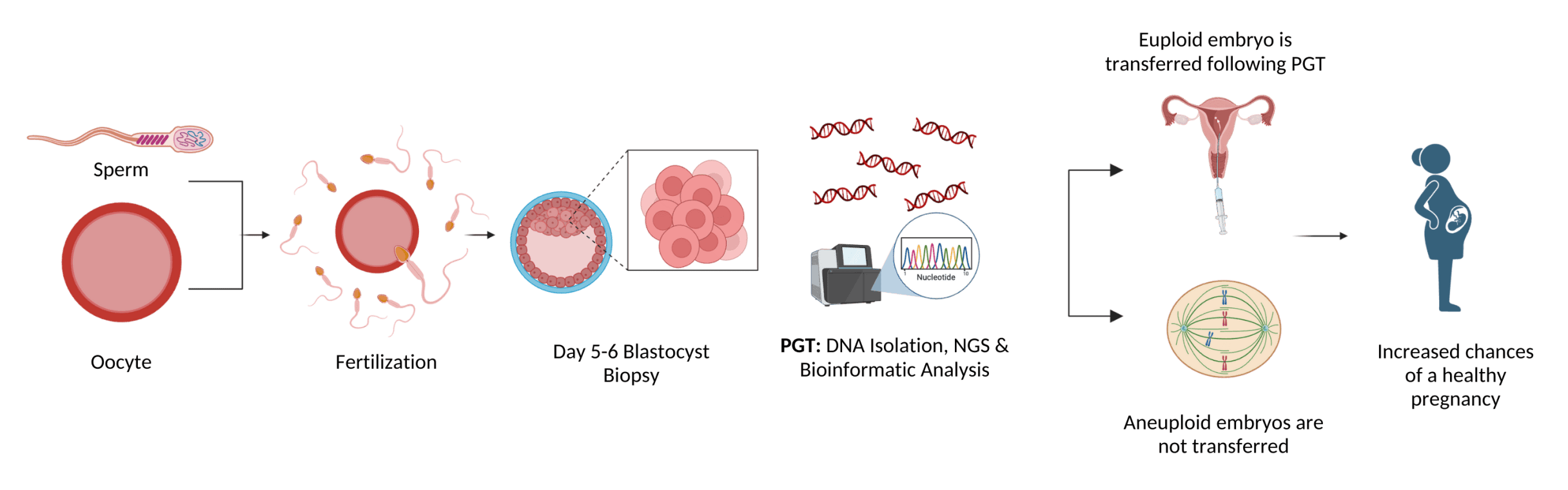
During the IVF process, embryos begin developing following fertilization and are monitored in the laboratory. Typically, on day 5 or 6 after fertilization, embryos that have reached the blastocyst stage undergo trophectoderm biopsy to collect a small sample of cells. The trophectoderm is the outer cell layer of the embryo that contributes to the formation of the placenta during subsequent development. The collected samples are analyzed using methods appropriate to the scope of the planned genetic test.
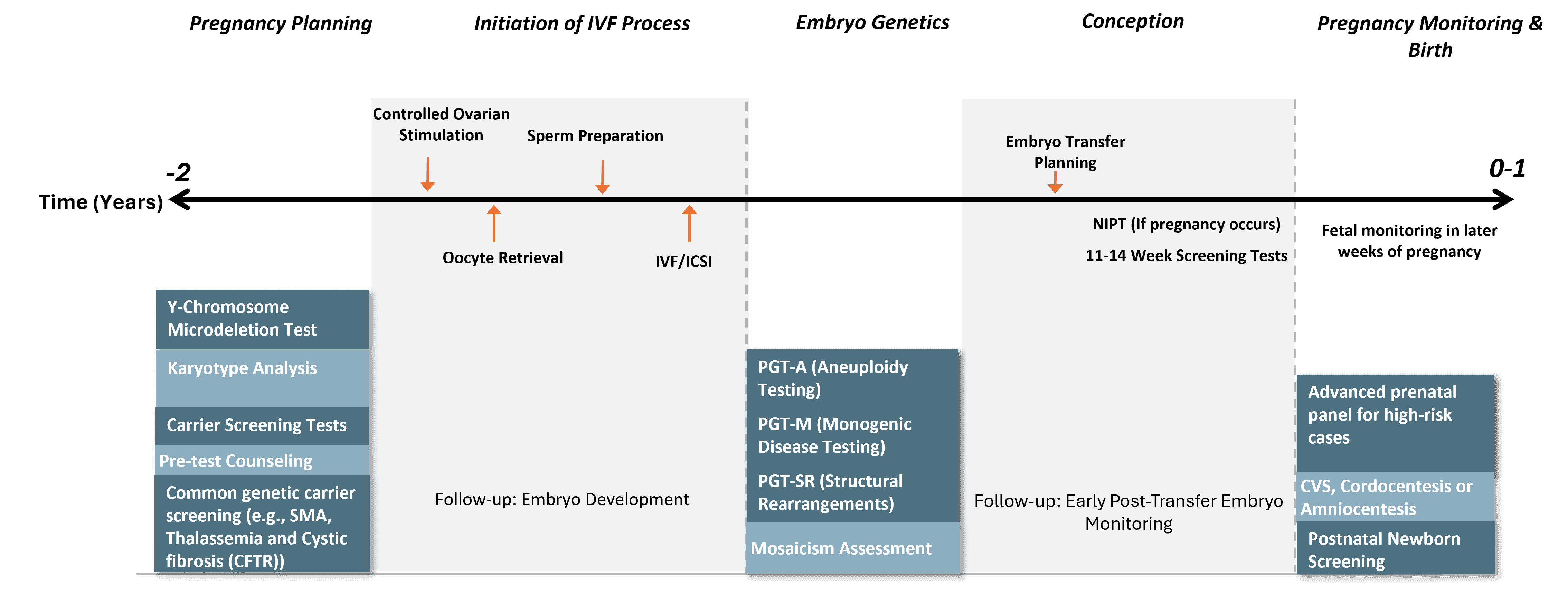
Preimplantation Genetic Testing (PGT) is performed as part of the in vitro fertilization (IVF) process and involves several stages, including embryo development, biopsy, genetic analysis, and evaluation of the results.
During treatment, the ovaries are stimulated in a controlled manner, and mature eggs are collected. The eggs are fertilized with sperm in the laboratory to initiate embryo development. The embryos are monitored in the laboratory throughout the subsequent stages.
Typically, on day 5 or 6 after fertilization, embryos that have reached the blastocyst stage undergo trophectoderm biopsy to collect a sample of cells for preimplantation genetic testing. The biopsy procedure is performed with consideration of the embryo’s developmental characteristics and laboratory protocols.
The genetic material obtained from the biopsy sample is analyzed using methods appropriate to the purpose of the planned test. Molecular technologies such as Next-Generation Sequencing (NGS) may be used to assess specific genetic and chromosomal changes, depending on the scope of the test.
The genetic analysis results help evaluate embryos with respect to the characteristics examined by the test. In planning embryo transfer, genetic findings are considered alongside embryo development and clinical assessment. The decision to proceed with transfer is made based on the evaluation of the relevant healthcare professionals.
According to ASRM and ESHRE guidelines, PGT is recommended in the following situations:
Preimplantation Genetic Testing (PGT) provides information only about the genetic and chromosomal characteristics covered by the test performed. It cannot identify all genetic disorders or all health conditions that may arise during pregnancy.
The presence of mosaicism in an embryo, the fact that the biopsy sample may not fully represent the entire embryo, and the technical limitations of the analytical method may affect the interpretation of results. Therefore, PGT results should be evaluated in consideration of the scope and limitations of the test.
The transfer of an embryo considered suitable based on genetic analysis does not guarantee pregnancy or the birth of a healthy baby. If pregnancy occurs, prenatal screening and diagnostic testing options should be considered in accordance with the recommendations of the treating physician.
19 Mayıs Mah. Çoruh Sok. No:32/1 Fulya, 34394 Şişli / Istanbul, Turkey
Monday - Friday 09:00 - 18:00 Saturday 09:00 - 14:00